What I Shared on WTKR News About AI, Seasonal Depression, and Why Human Connection Still Matters
Make it stand out
Last winter, WTKR News 3 reached out to me again — this time to speak about a trend I had been watching with concern: the growing reliance on AI chatbots and wellness apps for mental health support, specifically during the winter months when seasonal depression is most prevalent.
The conversation felt timely. More people are turning to AI as a first response to emotional struggle, and while the appeal is understandable, what I see clinically tells a different story about what that habit actually costs.
Why Seasonal Depression and AI Are a Particularly Bad Combination
Seasonal Affective Disorder — which I spoke about with WTKR in an earlier segment— is a pattern of depression tied to reduced sunlight and the colder months. One of its defining features is the pull toward withdrawal and isolation. That pull is not a preference. It is a symptom.
This is why the intersection of seasonal depression and AI use matters. The more you rely on an AI chatbot when you are struggling, the more you are reinforcing the very isolation that feeds the depression. As I told WTKR: it kind of feeds depression more, especially if it is Seasonal Affective Disorder, because you are in a season when you are already connecting less.
AI responds to you. It tailors itself to your patterns. But it is not a person, and it cannot provide what a person provides — the experience of being genuinely witnessed, the regulation that comes from human presence, the accountability of a real relationship. Those are not soft benefits. They are neurologically significant.
Who This Matters for Most
The dynamic I described on air becomes especially consequential for the people I work with most — high-achieving professionals, caregivers navigating burnout, and faith leaders carrying compassion fatigue. These are people who are already skilled at appearing fine. Already accustomed to self-sufficiency. Already practiced at managing things privately rather than reaching outward.
For this group, an AI conversation can feel like self-care while functioning as avoidance. The barrier to reaching toward another person stays intact. The isolation deepens quietly. And by spring, what could have been addressed becomes something harder to untangle — sometimes layered with grief, sometimes with the compounding weight of chronic illness or pain that went unsupported through a hard season.
The Right Way to Use Technology During a Hard Season
This is not an argument against technology, and it is not an argument against telehealth — which I fully support as a way to make genuine clinical support more accessible. It is an argument about sequencing and default behavior.
When you are in a low season, your first reach should be toward people. An in-person connection where possible. Telehealth when that is more accessible. A trusted person in your life when professional support has a wait. AI and digital wellness tools work as a supplement — a backup when nothing else is available — not as a replacement for the human contact that actually interrupts the depressive cycle.
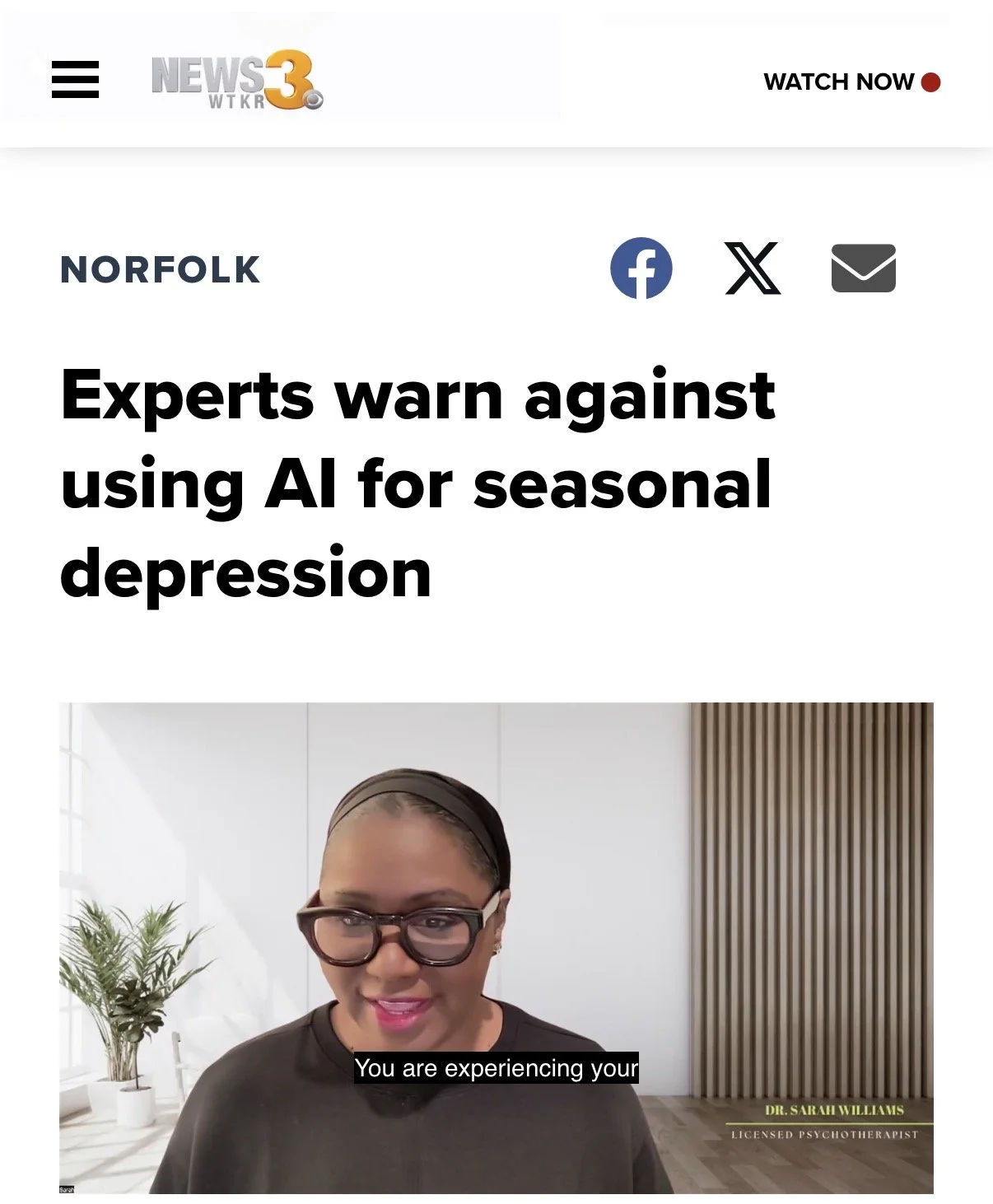
Watch the full segment on WTKR News 3 →Experts warn against using AI for seasonal depression
If you recognize the pattern I described — using busyness, technology, or self-sufficiency to manage what actually needs real support — that is worth exploring. Learn more about my work or schedule a consultation.
