What I Shared on WTKR News About Seasonal Affective Disorder — & Why Women Are Especially at Risk
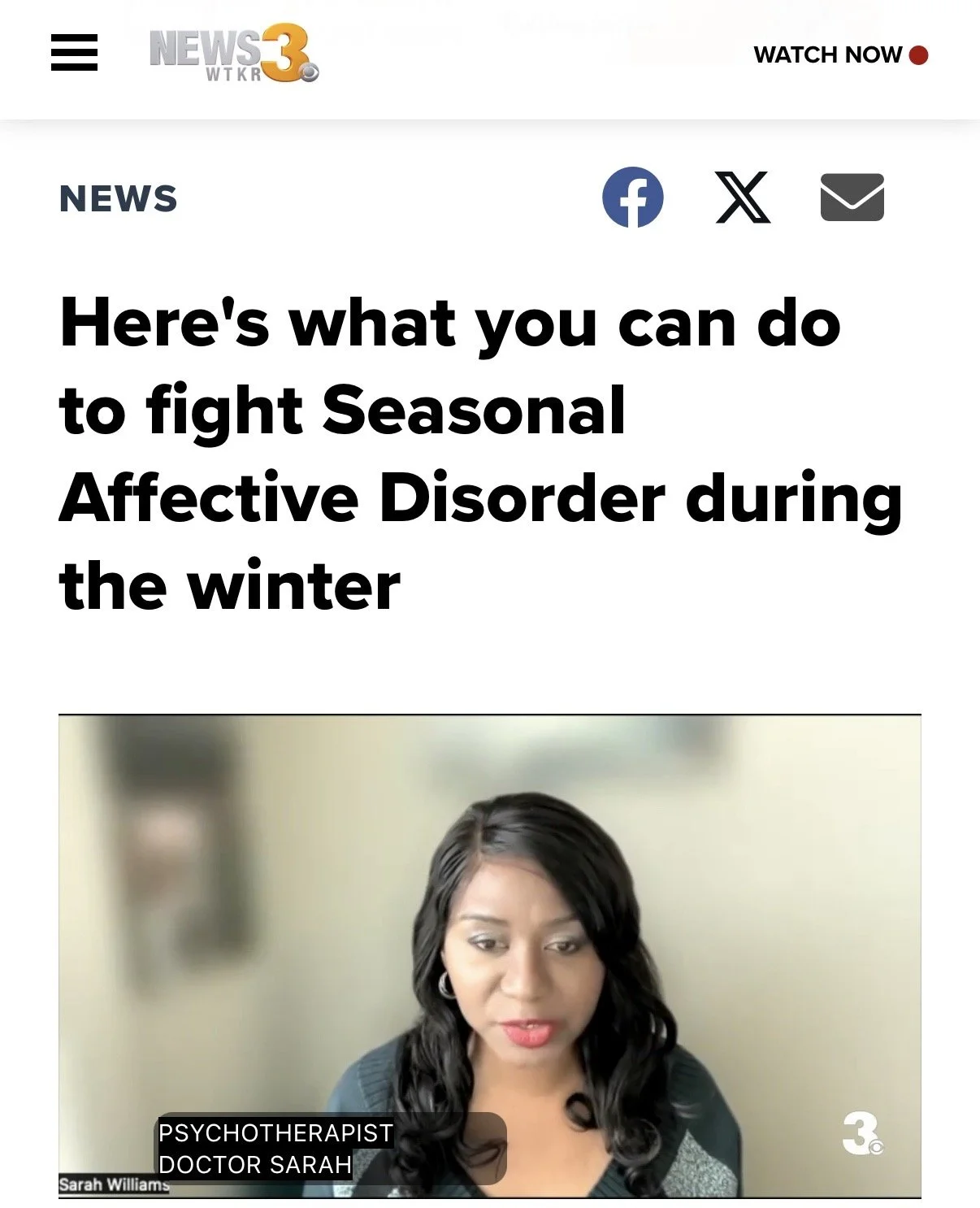
In the fall of 2022, I had the opportunity to speak with WTKR News 3 in Hampton Roads about Seasonal Affective Disorder — what it actually is, why it affects certain people more than others, and what helps when you are in the middle of it.
This is a topic that comes up consistently in my practice during the fall and winter months. What I find is that a lot of people dismiss what they are experiencing as ordinary tiredness or just the weather. The distinction matters, because SAD is a recognized mood disorder that responds well to specific interventions — and ignoring it tends to make it worse.
What Seasonal Affective Disorder Actually Is
Seasonal Affective Disorder is a pattern of depression that follows the seasons — most commonly beginning in the fall and lifting in the spring. According to the Mayo Clinic, roughly 3 million people experience it, and the National Institute of Mental Health notes that it can cause people to feel unlike themselves for stretches of weeks or months.
Common signs include oversleeping, overeating, weight gain, fatigue, carbohydrate cravings, and a persistent sense of hopelessness. What I said in the segment — and what I say to clients — is that a lot of times we allow the seasons to alter the very things that feed us and keep us healthy. Sleep, movement, nutrition, connection. When those shift, mood follows.
Why Women Are at Disproportionate Risk
The research is consistent on this: women are more susceptible to Seasonal Affective Disorder, and the reasons are both biological and social. Hormonal factors play a role, but so does what happens to our social lives during the winter months.
As I shared with WTKR: as women, we are social beings, and during the winter months we have fewer opportunities because of weather and climate. That reduced ability to socialize and do the things that feed our spirit — especially for Black women and women in caregiving roles who are already stretched thin — can compound quickly into something that feels heavier than expected.
This is particularly true for high-achieving professionals navigating burnout. You are managing demanding work, family responsibilities, and community expectations year-round. When the season changes and the social scaffolding thins out, there is less buffering against what you are already carrying. What arrives in the winter is often not new — it is the accumulated weight of a year finally making itself heard.
What Actually Helps
The interventions that work are not complicated, but they require intention during a season when everything in your body is pulling you toward withdrawal:
Movement — even light exercise shifts the neurochemistry involved in seasonal depression in ways that accumulate over time.
Light therapy — a quality light therapy lamp used in the morning can help compensate for reduced sunlight and support the endorphin regulation that the shorter days disrupt.
Vitamins — particularly vitamin D, which many people are deficient in during winter months.
Staying connected — deliberately, not passively. Maintaining social contact during winter requires more effort than it does in warmer months, and that effort is worth making.
And when self-directed strategies are not enough, professional support from a licensed clinician can provide a direct diagnosis and a path forward that is specific to what you are experiencing. If seasonal depression shows up alongside grief, identity shifts, or the particular exhaustion that comes from chronic illness, the picture becomes more layered — and the support needs to match that complexity.
Watch the full segment on WTKR News 3 → Here's what you can do to fight Seasonal Affective Disorder during the winter
If what I described sounds familiar — not just this season but as a recurring pattern — that is worth exploring with support. I work with high-achieving professionals, Black women, and caregivers navigating emotional exhaustion and the weight of carrying too much. Learn more about my approach or schedule a consultation.
